
ABOUT US
The MBTA Advisory Board plays a key role in the planning and allocation of funds for MBTA operations and capital projects. The Board is composed of the chief elected official of each of the 178 cities and towns or their designee.
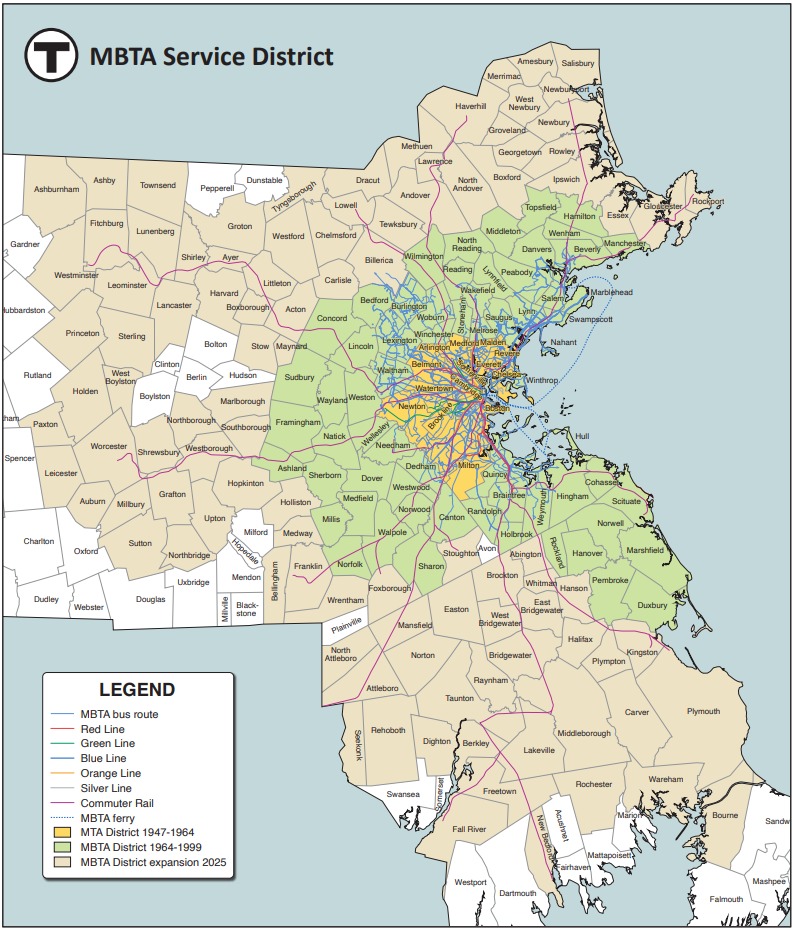
Pursuant to MGL Chapter 161A, Section 20, the MBTA Advisory Board has the authority to review and comment on the MBTA’s annual operating budget ($3.24 billion for FY2026) and capital plan ($9.8 billion through FY2030). These fiscal provisions touch every aspect of the MBTA’s operations, capital plan, and long-term plan and as such, any activity of the MTBA that has budgetary implications is within the purview of The MBTA Advisory Board.
Additionally, the MBTA Advisory Board’s membership make up 14 of 22 votes on the Boston Region Metropolitan Planning Organization (MPO) for the allocation of Regional Target Funds. The MPO is required by federal statute to prioritize federal transportation dollars for State and local government capital projects within the Boston region. This includes federal funds that may be designated for the MBTA capital program. Therefore, the membership of the MBTA Advisory Board has a deciding role in this aspect of the MBTA’s financing plan for capital projects.


OUR MISSION
Our mission is to provide public oversight of the Massachusetts Bay Transportation Authority (MBTA) on behalf of the 178 community members of the Advisory Board and the transit riding public. The MBTA Advisory Board provides policy guidance to the MBTA with the shared goal to provide effective and efficient transportation services in the metropolitan Boston area.


OUR MISSION
Keeping the MBTA:
Reliable – Accountable – Transparent
- Provide a voice for riders, taxpayers and the public
- Hold the MBTA accountable
- Encourage a more transparent MBTA
- Demand reliable public transportation services
- Brief Mayors, Select Boards, City/Town Managers and members of the public on MBTA issues
- Review and comment on MBTA’s operations and capital programs that may have budgetary implications.
- Monitor the MBTA policies through the lens of economic and environmental justice and social equity